GHK-Cu is a copper-binding tripeptide complex frequently referenced in scientific literature and peptide research investigating cellular communication systems and peptide-mediated signaling pathways. Within laboratory environments, this compound is studied as a synthetic peptide complex used in controlled peptide research exploring molecular signaling mechanisms, peptide stability, and interactions within biological regulatory pathways.
As a laboratory peptide compound, GHK-Cu is commonly examined in preclinical peptide studies focused on peptide molecular structure, metal-binding peptide complexes, and cellular signaling dynamics associated with peptide-mediated biological communication systems.
WHAT IS GHK-Cu
GHK-Cu refers to a copper-binding tripeptide complex formed from the peptide sequence glycyl-L-histidyl-L-lysine (GHK) coordinated with a copper ion. The peptide sequence itself was originally identified in human plasma and has since become widely referenced in peptide research investigating peptide signaling pathways and cellular communication mechanisms.
In laboratory peptide research, GHK-Cu is classified as a synthetic peptide compound and copper-binding signaling peptide complex. Researchers study this peptide due to its role in molecular signaling systems, peptide-metal interactions, and biological regulatory networks observed in experimental models.
Scientific investigations often examine how the peptide molecular structure of GHK interacts with copper ions and participates in cellular signaling processes. These studies explore peptide receptor interactions, gene expression signaling pathways, and molecular regulatory systems within controlled research environments.
Key Research Areas
Scientific literature references GHK-Cu in a variety of laboratory peptide research areas, including:
peptide signaling pathways
cell signaling research
receptor binding interactions
peptide-metal complex interactions
metabolic pathway research
inflammatory pathway research
molecular signaling mechanisms
cellular communication pathways
peptide stability and structural activity
laboratory peptide characterization
These areas are explored within experimental and preclinical research models designed to understand peptide signaling and biological regulatory mechanisms.
GHK-Cu is composed of a three-amino-acid peptide sequence (glycine, histidine, and lysine) that forms a stable complex with a copper ion. This peptide molecular structure allows researchers to investigate copper-binding peptide complexes and their interaction with cellular signaling networks.
In laboratory peptide characterization studies, the peptide sequence and its metal-binding properties are analyzed to understand how peptide-copper complexes interact with biological systems. Researchers often examine the compound’s peptide molecular structure to evaluate stability, structural conformation, and participation in peptide signaling pathways.
As a synthetic peptide compound used in controlled research settings, GHK-Cu provides a model system for studying peptide-mediated molecular communication and peptide-metal interactions within biological research models.
Scientific Research Context
Scientific literature has explored GHK-Cu in experimental studies examining peptide signaling pathways and cellular regulatory systems. These investigations frequently focus on peptide-mediated molecular communication and gene expression signaling mechanisms in controlled research models.
The peptide has been studied in experimental models investigating cellular signaling systems related to tissue remodeling processes, inflammatory pathway research, and metabolic regulatory pathways. Additional preclinical peptide studies have examined peptide-copper complexes in relation to molecular signaling networks associated with biological processes observed in conditions such as tissue degeneration, metabolic disorders, and inflammatory responses.
These studies are conducted within controlled laboratory and preclinical research environments designed to explore peptide molecular interactions and cellular signaling mechanisms.
Product Specifications
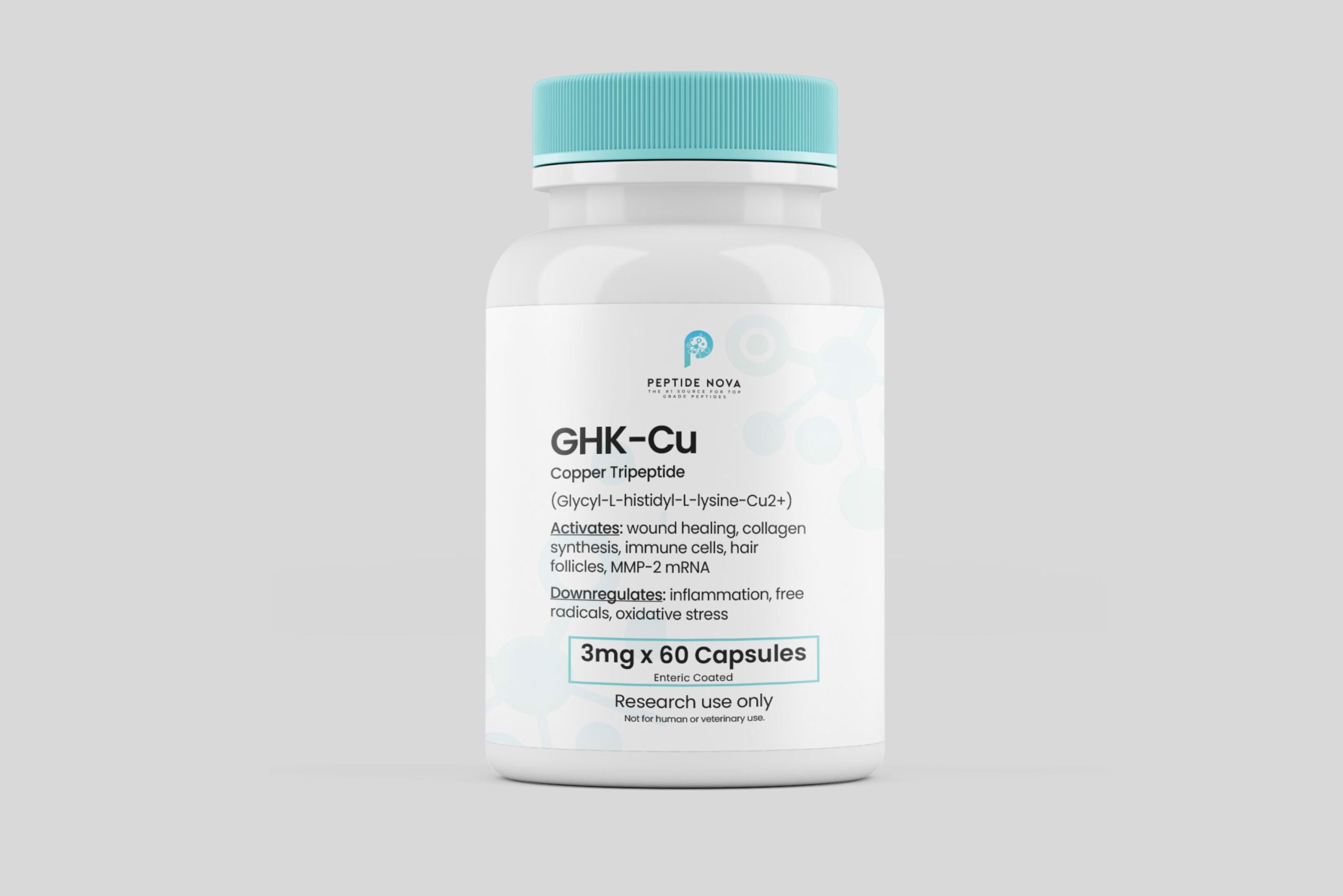
Compound Name: GHK-Cu (Glycyl-L-Histidyl-L-Lysine Copper Complex) Peptide Classification: Copper-binding synthetic tripeptide Format: Capsule format for laboratory handling and measurement Quantity: 3MG per unit (60 Capsules) Research Category: Peptide research / cell signaling research / molecular pathway research Storage Recommendations: Store in a cool, dry environment protected from heat, moisture, and direct light. Long-term storage under controlled laboratory conditions is recommended.
Research Disclaimer
Research Use Only. Not for human or veterinary use. Not approved by the FDA and not intended to diagnose, treat, cure, or prevent any disease.
Links To Research Studies
AS SEEN ON
Infinite Logo Marquee
Trusted Source
We are a USA based company and provide fast shipping solutions.
Proven Results
We have hundreds of practitioners and researchers who have tested and trust our products.
Tested Quality
Each peptide batch is rigorously tested for purity through our third-party labs.
Legal Disclaimer
For research purposes only. Not for consumption, clinical use, or diagnostic purposes. Buyer assumes all responsibility for proper handling and use in compliance with applicable regulations.